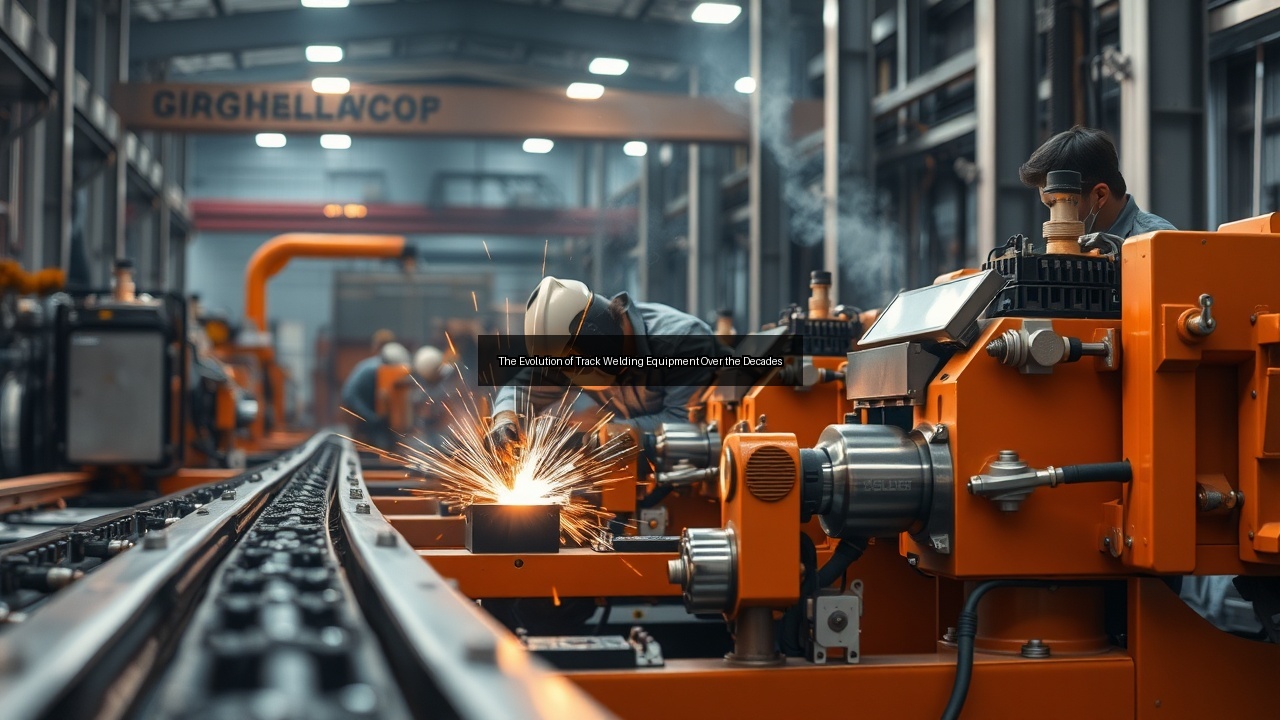
The Evolution of Track Welding Equipment Over the Decades
The Beginnings of Track Welding Equipment
Early Innovations in Welding Machines
The journey of track welding equipment began in the early 20th century, when engineers sought efficient methods to join metal components for rail tracks. The first welding machines were rudimentary, relying heavily on manual operation. These early welders primarily utilized arc welding techniques, creating strong, reliable bonds between metal pieces. While basic in design, these machines laid the groundwork for future advancements. As machine for track welding demand for faster and more efficient track laying increased, innovations in welding technology became crucial. Engineers started experimenting with various welding processes, aiming to improve the quality and speed of their work.
The Role of Electrodes in Initial Designs
Electrodes played a significant role in the initial designs of welding machines. These conductive rods facilitated the flow of current necessary for creating the weld. In the early stages, the quality of the welds depended heavily on the type and quality of the electrodes used. Manufacturers began developing specialized electrodes tailored for specific welding applications. This focus on electrode innovation not only improved weld quality but also enhanced the overall durability of the weld. As engineers gained a better understanding of metallurgy, the selection of electrodes became increasingly sophisticated, allowing for more versatile welding processes.
Introduction of the Connecting Rod and Oscillator Mechanisms
To further improve the efficiency of track welding, engineers introduced the connecting rod and oscillator mechanisms. These components allowed for better control over the welding process, enabling machines to produce consistent and high-quality welds. The connecting rod linked the welding machine's motor to the welding head, translating rotational motion into linear motion. This innovation allowed welders to achieve precise oscillation patterns, which are crucial for creating strong welds along the entire length of the rail. The introduction of oscillation in welding machines marked a significant evolution, enabling more complex and intricate welds, setting the foundation for future technological advancements.
Advancements Through the Decades
The 1980s: Introduction of Lightweight Track Welders
The 1980s marked a significant turning point in track welding equipment with the introduction of lightweight track welders. These machines revolutionized the welding process, offering enhanced portability and ease of use. Unlike their heavier predecessors, lightweight welders allowed operators to move freely along the rail, reducing downtime and increasing overall efficiency. The design incorporated advanced materials that provided strength without the bulk, making these machines ideal for various track welding applications. Operators could easily transport these machines to remote locations, paving the way for more efficient rail maintenance and construction projects.
The 1990s: Rise of Automated Track Welding Machines
The 1990s witnessed a surge in automation within the track welding industry. Automated track welding machines emerged, significantly reducing the labor required for welding tasks. These machines utilized computer-controlled systems to perform precise and consistent welding operations, enhancing the quality of welds while minimizing human error. The rise of automation also led to increased production rates, allowing for faster completion of track laying projects. As companies sought to optimize their operations, the investment in automated machines proved beneficial. The integration of advanced technology not only streamlined the welding process but also ensured that safety standards were met consistently.
Ceramic Components and Their Impact on Welding Efficiency
In the quest for improved efficiency, manufacturers began incorporating ceramic components into welding machines. These materials offered exceptional thermal stability and wear resistance, which significantly enhanced the overall lifespan of the machines. Ceramic insulators and other components minimized energy loss during the welding process, leading to higher efficiency. This innovation allowed welders to achieve better results with less energy consumption, making the machines more environmentally friendly. The integration of ceramic technology represented a key advancement in track welding, allowing for longer operational periods without the need for extensive maintenance, ultimately improving the return on investment for businesses.
Modern Track Welding Technologies
The Integration of Advanced Oscillation Techniques
Modern track welding technologies have embraced advanced oscillation techniques that enhance the precision and quality of welds. Today's welding machines use sophisticated oscillation patterns to ensure even heat distribution across the weld site. This technology allows for deeper penetration and stronger bonds between metal components, which is essential for the demanding conditions of rail transport. Manufacturers have developed machines equipped with programmable oscillation functions, enabling welders to customize settings based on specific project requirements. The result is a more adaptable and efficient welding process, capable of meeting the diverse needs of the rail industry.
Gullco International's Contributions to Track Welding
Gullco International has emerged as a leader in the track welding equipment market, consistently pushing the boundaries of technology. Their innovative track welding machines utilize cutting-edge design and engineering principles to deliver superior performance. Gullco's equipment features advanced automation capabilities, ensuring high-quality welds while minimizing operator fatigue. The company's commitment to research and development has led to the creation of versatile machines capable of handling various welding tasks. By prioritizing user-friendly interfaces and robust construction, Gullco International has established a reputation for reliability and efficiency in the track welding industry.
Evaluating Return on Investment for New Welding Machines
Investing in modern track welding machines involves careful consideration of the return on investment (ROI). Businesses must assess the long-term benefits of upgrading equipment against the initial costs. Newer machines often provide enhanced efficiency, reduced operational costs, and improved weld quality, resulting in significant savings over time. Factors such as decreased labor costs, lower energy consumption, and increased production rates contribute to a favorable ROI. Companies should conduct thorough evaluations, taking into account maintenance requirements and the longevity of new equipment, to ensure that their investment yields the desired financial outcomes.
Future Trends in Track Welding Equipment
Emerging Technologies in Track Welding
The future of track welding equipment appears promising, with emerging technologies poised to transform the industry. Innovations such as artificial intelligence and machine learning are beginning to play a role in optimizing welding processes. These technologies can analyze real-time data to make adjustments on the fly, ensuring consistent weld quality. Additionally, advancements in materials science may lead to the development of even more efficient welding machines, capable of withstanding extreme conditions. The integration of smart technology in track welding equipment will likely enhance productivity and reduce the likelihood of human error.
The Role of Automation in Welding Machines
Automation will continue to shape the track welding landscape, driving efficiencies and enhancing safety. Future welding machines may feature more advanced robotics, capable of performing complex welding tasks with precision. By reducing the need for manual intervention, these automated systems can minimize risks associated with welding operations. Companies adopting automated solutions will experience increased throughput and decreased labor costs, setting them ahead in a competitive market. The continued evolution of automation in track welding machines represents a significant opportunity for businesses to improve operational efficiency.
Sustainability and Efficiency in Modern Track Welding
As the world moves toward sustainable practices, the track welding industry is not left behind. Modern machines are increasingly designed with energy efficiency in mind, utilizing technologies that reduce energy consumption and waste. Sustainable materials are becoming more common in the production of welding equipment, further minimizing environmental impact. Companies are also exploring eco-friendly welding methods, such as using alternative energy sources. Focusing on sustainability not only benefits the environment but also enhances the overall appeal of companies to clients who prioritize green practices in their supply chains. The future of track welding equipment will undoubtedly embrace sustainability as a core principle.