Understanding the Role of Thermocouples in Temperature Measurement
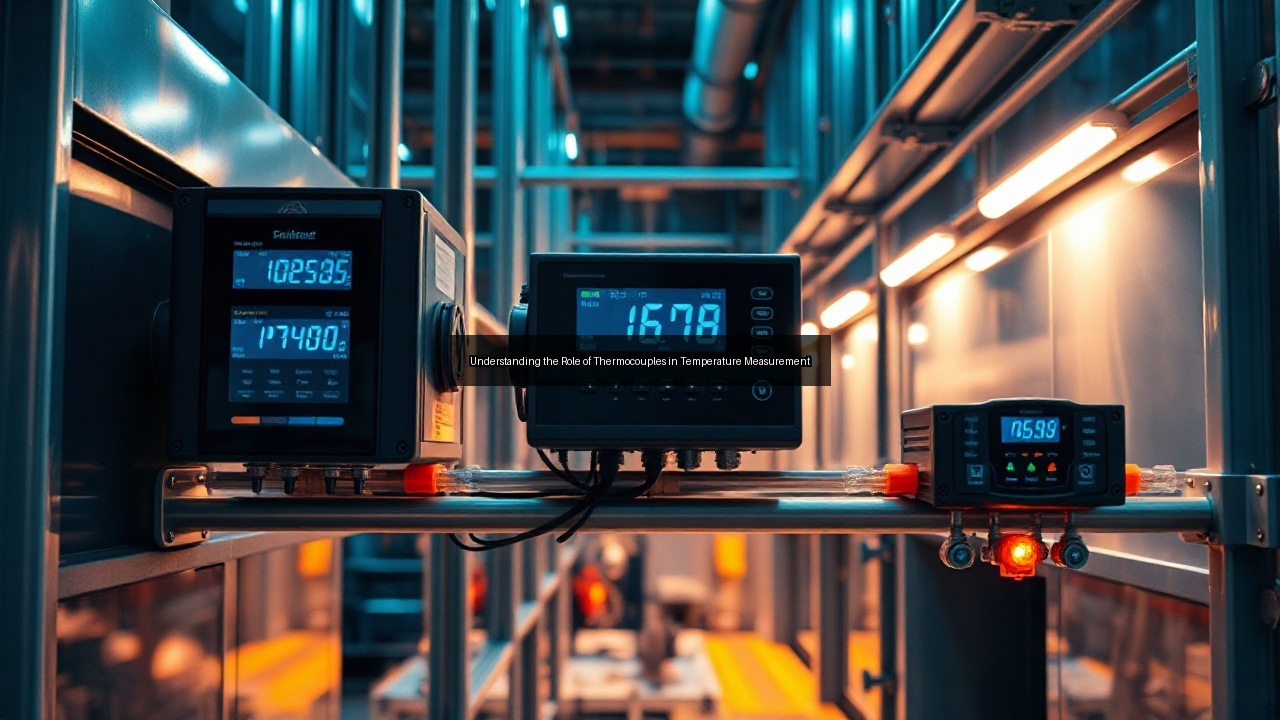
Introduction to Thermocouples and Temperature Measurement
What is a Thermocouple?
A thermocouple is a widely used temperature sensor that consists of two different types of metal wires joined at one end. When this junction experiences a change in temperature, it generates a voltage that correlates to the temperature difference between the junction and the other ends of the wires. This principle, known as the Seebeck effect, allows thermocouples to provide reliable temperature readings across a broad range of applications. They are popular in industrial settings due to their simplicity, robustness, and ability to measure high temperatures, often exceeding 1000 degrees Celsius, depending on the metal types used. Thermocouples come in various types, including Type K, J, T, and E, each suited for specific temperature ranges and environments. Their versatility makes them a preferred choice for temperature measurement tasks in diverse applications.
How Thermocouples Work in Temperature Measurement
Thermocouples operate on the principle of thermoelectricity, where a voltage develops at the junction of dissimilar metals when exposed to temperature changes. This voltage is proportional to the temperature gradient between the hot junction and the reference junction, typically maintained at room temperature. The generated voltage can be measured using a process temperature controller, which interprets the signal and converts it into a readable temperature value. Calibration plays a vital role in ensuring accuracy; this involves adjusting the thermocouple output to match known temperature points. Accurate temperature measurement is crucial in temperature control systems, especially in industrial processes where precise thermal management is essential for maintaining product quality and safety standards.
Importance of Accuracy and Precision in Temperature Control
Accuracy and precision in temperature control are paramount for optimizing industrial processes. Small fluctuations in temperature can lead to significant changes in product quality, yield, and operational efficiency. For instance, in chemical manufacturing, maintaining the correct temperature ensures that reactions occur as intended, preventing waste and ensuring safety. Accurate temperature measurement prevents overheating or underheating, which can damage equipment or lead to subpar products. The integration of thermocouples with sophisticated process temperature controllers enhances precision in temperature regulation. Controllers utilizing PID (Proportional-Integral-Derivative) algorithms optimize temperature control by continuously adjusting the heating or cooling processes based on real-time temperature readings, thus maintaining a stable environment DIN-rail controls for industrial processes.
Process Temperature Controllers: An Overview
Types of Process Temperature Controllers
Process temperature controllers come in various types, each designed to meet specific industrial requirements. They can be broadly categorized into standalone controllers and more complex systems that integrate with other automation equipment. Standalone controllers are often used for simple applications where direct temperature regulation is necessary. In contrast, advanced systems may incorporate features such as data logging, remote monitoring, and integration with existing automation frameworks. Panel-mount controllers fit neatly into control panels, while DIN rail controllers provide a modular solution for mounting within electrical enclosures. Additionally, PC-programmable controllers allow users to customize control strategies and settings, offering flexibility in how temperature is managed across different processes. Understanding the options available is essential for selecting the right process temperature controller to match specific operational needs.
PID Control and Its Significance
PID control stands out as a fundamental approach in temperature control systems. It combines three control actions: proportional, integral, and derivative. The proportional component provides immediate response to temperature deviations, while the integral action eliminates steady-state errors. The derivative action predicts future temperature changes by considering the rate of change, enhancing system stability. This combination allows PID controllers to maintain tight temperature control, minimizing overshoot and oscillations. The significance of PID control lies in its adaptability to various processes, making it ideal for applications requiring precise temperature regulation. In many industrial settings, PID controllers work seamlessly with thermocouples, using the temperature readings to adjust heating or cooling elements swiftly. This integration ensures optimal conditions are maintained, enhancing both efficiency and product quality.
Integration with RS-485 and Modbus Communication
Modern process temperature controllers often include communication protocols such as RS-485 and Modbus. These communication methods facilitate data exchange between controllers and other devices, such as PLCs (Programmable Logic Controllers) or SCADA systems (Supervisory Control and Data Acquisition). RS-485 allows for long-distance communication in noisy environments, making it suitable for industrial applications. Modbus, a widely adopted protocol, enables devices to communicate over a network, allowing for centralized monitoring and control of temperature across multiple points. This integration enhances operational efficiency by providing real-time data and control capabilities, which are essential for effective temperature management in complex industrial processes. Utilizing these communication options helps ensure that temperature control systems remain responsive and reliable, contributing to overall process optimization.
Applications of Thermocouples in Industrial Settings
Temperature Measurement in Automation Processes
Thermocouples play a vital role in automation processes across various industries. They provide critical temperature measurements that inform automated systems, ensuring that processes operate within designated thermal limits. In manufacturing plants, thermocouples monitor temperatures in ovens, furnaces, and reactors, enabling automated control systems to maintain optimal conditions. The data collected is essential for quality control, as it ensures that products meet specific temperature criteria throughout production. Additionally, the integration of thermocouples in automation enhances system reliability by allowing for real-time adjustments based on temperature variations. This capability significantly reduces the risk of temperature-related failures, ultimately improving operational efficiency and minimizing downtime.
Utilizing Thermocouples for Humidity and Pressure Control
Beyond temperature measurement, thermocouples can assist in controlling humidity and pressure in industrial environments. Many processes rely on maintaining specific temperature and humidity levels to ensure product integrity. For instance, in food processing and pharmaceuticals, thermocouples provide critical data that inform humidity control systems, ensuring optimal conditions for preservation and efficacy. Additionally, thermocouples can be used in conjunction with pressure sensors to monitor and control environments where temperature and pressure fluctuations can impact product quality. By utilizing thermocouples in these applications, industries can achieve better stability in their processes, leading to enhanced product consistency and reduced waste.
Comparing Thermocouples with Infrared Measurement Devices
Thermocouples and infrared measurement devices serve distinct purposes in temperature measurement, each with its advantages. Thermocouples provide direct contact measurement, which often yields more accurate readings in controlled environments. They excel in high-temperature applications and offer robust performance in harsh conditions. In contrast, infrared temperature measurement devices offer non-contact measurement, making them ideal for monitoring moving objects or measuring temperature from a distance. While infrared devices provide quick readings, they may not always be as accurate as thermocouples, particularly in reflective or transparent surfaces. Each type has its place in industrial settings, and understanding their differences enables operators to select the appropriate technology based on specific measurement needs.
Choosing the Right Temperature Control Equipment
Factors to Consider When Selecting a Process Temperature Controller
Selecting the right process temperature controller involves evaluating several critical factors. First, consider the temperature range required for your specific application. Different controllers accommodate varying temperature ranges, and selecting one that meets your needs is crucial for optimal performance. Next, assess the required control accuracy and precision. For processes demanding strict temperature control, PID controllers with high-resolution inputs may be necessary. Additionally, consider the environment in which the controller will operate. Controllers designed for harsh environments may include protective features such as dust and moisture resistance. The ease of integration with existing systems, including communication protocols like RS-485 and Modbus, plays a significant role. Choosing a controller that aligns with your existing automation setup can streamline the implementation process and enhance overall efficiency.
Exploring DIN Rail and Panel-Mount Controller Options
DIN rail and panel-mount controllers provide different mounting solutions suitable for various applications. DIN rail controllers offer flexibility and modularity, allowing easy installation in electrical enclosures. This mounting style is preferred for control panels where space is limited. Panel-mount controllers, on the other hand, fit directly into control panels and provide a more permanent installation. When selecting between these options, consider factors such as available space, the need for accessibility, and the overall design of the control system. Both mounting styles offer various features and functionalities, including configurable inputs and outputs. Evaluating these factors will help ensure that the selected controller meets the operational requirements while fitting seamlessly within the existing infrastructure.
Configurable Inputs and Outputs for Enhanced Control
Configurable inputs and outputs significantly enhance the flexibility and functionality of process temperature controllers. Many modern controllers allow users to customize these parameters according to their specific needs, enabling better integration with various sensors and actuators. For instance, choosing controllers with multiple input options allows for the use of different types of temperature sensors, including thermocouples and RTDs (Resistance Temperature Detectors). Configurable outputs enable seamless communication with actuators, such as heating elements or cooling systems, ensuring precise temperature regulation. This adaptability is essential for industries where processes frequently change or industrial temperature controls demand unique control strategies. By maximizing the configurability of temperature control equipment, businesses can achieve optimal performance and maintain stringent temperature management standards.
See Also
- Innovative Surface-Mount Control Options for Space-Saving Solutions
- Understanding Modbus Protocol for Enhanced Temperature Control
- The Future of Automation in Temperature Control Systems
- The Science Behind Process Temperature Regulation and Accuracy
- The Advantages of DIN Rail Mounted Temperature Controllers